Work design and the SMART framework
Learn how SMART work design can improve wellbeing, engagement and performance.
What is work design?
Work design is about how a person’s job is set up, including:
- what tasks they do
- how they do them
- who they work with
- what decisions they can make.
Work design is rarely created by one person alone. The way we experience work is influenced by managers, teams, leaders and organisational systems including policies, processes, technology and governance arrangements.
Good work design helps people perform well, stay healthy and work sustainably. When work is designed well, people are more likely to be engaged, productive and able to manage work demands.
Improve work with SMART
SMART is a practical, evidence-based framework for creating good work. Improving SMART work design can help reduce psychosocial risks while supporting wellbeing, engagement and performance. Consider SMART when:
- workload is increasing
- staff feel burnt out
- engagement is declining
- roles are unclear
- teams are undergoing change
- new systems or processes are being introduced.
SMART focuses on 5 important aspects of work:
- Stimulating
- Mastery
- Agency
- Relational
- Tolerable demands.
Stimulating work is work that engages and challenges us. It requires us to apply our skills, perform a variety of tasks and problem-solve.
Mastery at work means knowing we’re performing to our potential. Mastery comes from role clarity, getting feedback on performance and being able to take a task from beginning to end.
Agency involves a sense of autonomy and control over how our work is scheduled and carried out. It’s also about being able to make judgements and decisions about our work and influence decisions beyond our control.
Relational work is about feeling supported at work and connected to others and to the purpose of our work.
Tolerable work demands are work demands that feel sustainable, particularly in terms of time pressure, emotional demands and role conflict.
Create work that is challenging but sustainable
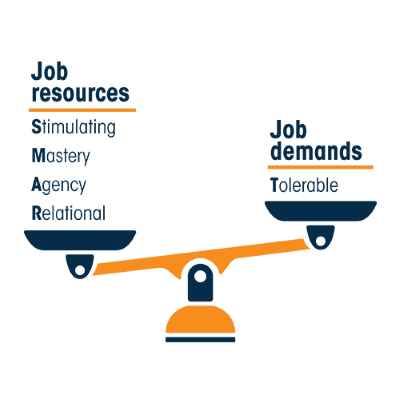
The first 4 SMART elements act as protective factors in work. These job resources help people stay motivated, supported and capable of meeting work demands. Ideally, job resources are in balance with demands, helping demands feel tolerable. When not balanced by job resources, job demands pose an increased risk to people’s health and wellbeing.
The SMART framework helps you assess how job resources and demands currently stack up and then take action to build resources and reduce demands where needed.
Get started with SMART work design
The SMART framework gives a shared language for identifying opportunities to improve work.
Want to discuss SMART work design with a team? Use the SMART work design team talk to start the conversation:
You can also explore our pages for individuals, managers and organisations:
Case studies
Every day, people are using SMART work design to improve their work. See how they’re doing it in these work design case studies.
Training
Whether you’re an established or developing leader, or you want specialist capability, these learning opportunities can help strengthen your ability to use SMART work design in practice.
Two Australian Public Service (APS) Academy programs help leaders use SMART work design in their roles:
- APS Management Edge is for APS 6 and EL 1 team leaders who want to build their everyday management judgement, lead confidently through complexity, and strengthen their teams in APS contexts.
- APS Leadership Edge is for EL 2 employees who want to develop their leadership and management skills.
Curtin University's SMART Work Design Curtin Credential offers in-depth, formal knowledge of work design and SMART.
More information
For more information about SMART work design visit the Curtin University Centre for Transformative Work Design.